
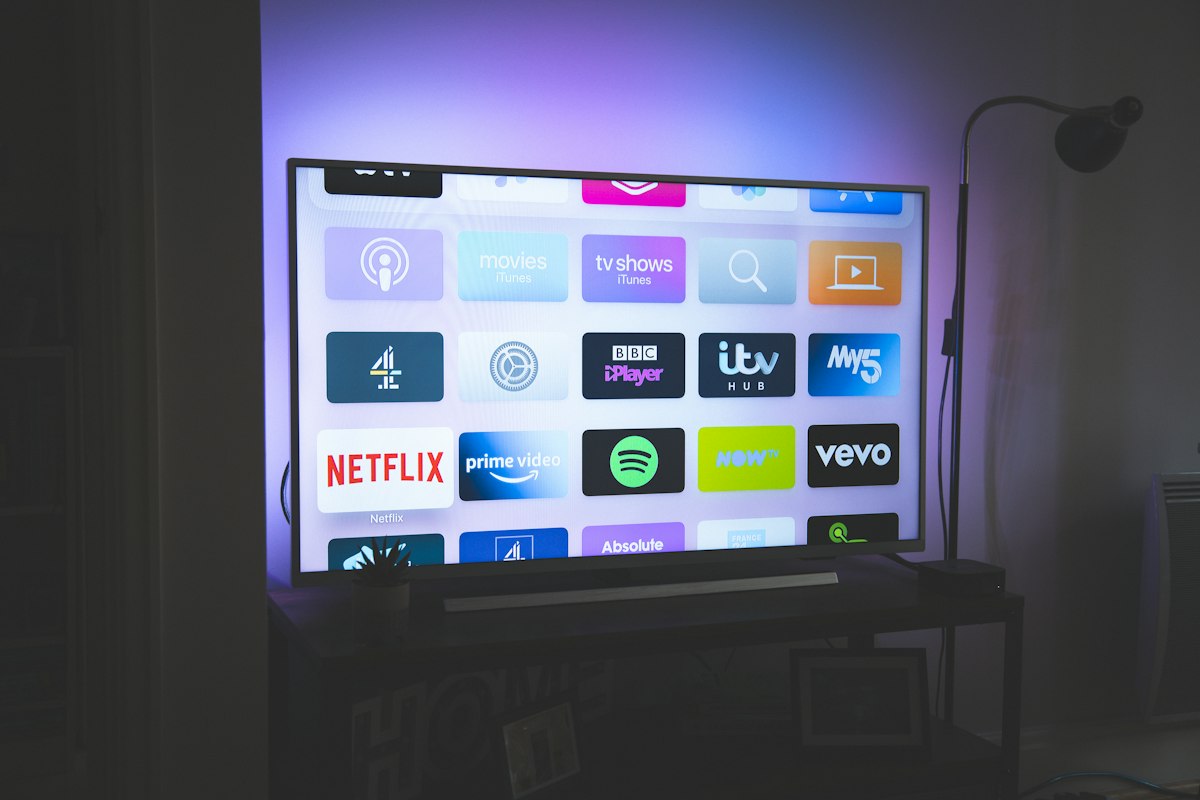
If you want to cut the cord, you've got two famous paths: an IPTV subscription or a streaming service like Netflix. And honestly? They're not really competitors — they're built for different jobs. This guide compares the two fairly, so you can decide whether you need live TV, on-demand, or the hybrid setup most households actually end up with in 2026.
IPTV vs Netflix: The 30-Second Summary
If you only read one part of this article, read this table:
| What You Care About | IPTV | Netflix / YouTube |
|---|---|---|
| Live channels | Yes — news, sports, international | Rarely (limited Netflix live events) |
| Sports streaming | Strong — leagues and PPV-style live | Limited |
| Movies & series on demand | Often included as VOD | Core strength, huge catalogues |
| Original productions | Not typically | Yes — exclusive originals |
| International / regional channels | Excellent | Poor |
| Catch-up & recording | Common | On-demand by design |
| Legal clarity | Depends on provider licensing | Fully licensed |
| Multiple screens | Yes, often many | Yes, plan-dependent |
What IPTV Does That Netflix Can't
IPTV's edge is live television — the thing streaming services fundamentally aren't built for:
Live sports and events
When a match kicks off at a fixed time, you don't want a catalogue; you want a channel that's already on. IPTV delivers live sports, and for many viewers that alone decides the question. Our guide to live sports channels on IPTV shows what a proper sports lineup looks like.
Live news and current affairs
Breaking news, morning shows, and rolling coverage are channels, not files. IPTV carries them the same way cable did — always on. There's no "press play on the news."
International and regional TV
Expats and multilingual households are IPTV's biggest fans. A single subscription can bundle channels from home countries, diaspora networks, and local markets that no US/EU streaming service provides at all.
Multiple screens, one subscription
IPTV plans commonly allow several simultaneous streams — three or four devices watching different channels on one bill is normal. That matters for big families at a much lower price per screen than cable ever offered.
Where Netflix and YouTube Are Genuinely Better
Fair is fair. Streaming services win these categories outright:
On-demand depth and originals
Netflix's core product is an enormous, browsable library with flagship original productions. IPTV VOD sections are usually a bonus, not a curated boutique — if your primary hobby is binging acclaimed series on demand, a streaming service is the better tool.
App polish and reliability
Streaming apps are battle-tested on every device, with autoplay, profiles, offline downloads, and mature recommendation engines. IPTV apps vary widely — some are excellent (TiviMate, IPTV Smarters), others are clunky. You're paying for an ecosystem, not a channel list.
Zero legal ambiguity
Netflix pays for its catalogue. It is licensed, plain and simple. IPTV's biggest caveat is that not every provider holds rights to what they stream — that's the risk variable you simply don't have with a mainstream streaming service.
Streaming services are always legal; IPTV services may or may not be, depending on the provider's licensing. If an IPTV package looks suspiciously cheap for its channel count, ask whether the reseller holds rights — if the answer is vague, so is the legality. Our free vs paid IPTV article explains how to tell the difference.
Cost: What You Actually Pay
This is where the two diverge hard, so let's be concrete about how the money moves:
- Netflix is a flat monthly subscription with a strict cap on simultaneous screens — you pay for how many people watch at once, not how many channels you get. Budget-conscious viewers find themselves doing clever password-share gymnastics, and the service keeps raising prices as it adds original content.
- IPTV typically charges one price for an enormous channel count, expandable across multiple family members and devices. The catch is that the market is unregulated — prices swing wildly between providers, and a dirt-cheap plan is usually a red flag rather than a bargain.
For a full break-down of what typical IPTV plans cost, how they stack against cable, and where hidden fees hide, our IPTV pricing guide does the math. And for the endpoint-of-the-spectrum view, our IPTV vs cable comparison shows how traditional TV billing compares.
Internet Requirements: Same Cable, Same Rules
Here's the funny part: IPTV and Netflix both depend on the same thing — your internet connection. The quality you can watch scales the same way for both:
| Quality | Recommended Speed | Data Per Hour |
|---|---|---|
| SD (480p) | 8 Mbps | ~0.7 GB |
| HD (720p) | 12 Mbps | ~2 GB |
| Full HD (1080p) | 25 Mbps | ~3.75 GB |
| 4K UHD (2160p) | 35-50 Mbps | ~8.5 GB |
These are the bitrate figures Netflix publishes for its own streams, and they're the same ladder IPTV providers target. One nuance: live sports hits the highest bitrates — a provider's own compressed masters for fast motion can spike above the baseline, so the headroom matters more for IPTV sports than for cushiony on-demand. Use our bandwidth calculator to size your plan, then measure your reality with the free speed test.
Can You Use Both? (Most Households Do)
Let's be realistic: the strongest setup in 2026 is usually both — with each service doing the job it's best at:
- IPTV covers live TV: sport, news, international channels, catch-up.
- Netflix or YouTube covers the on-demand library and originals.
IPTV prices make this viable — a mid-level IPTV plan plus one streaming service typically still lands well below a cable bill. The combination gives you the live-experience of TV and the depth of streaming, on the same device, with one unified remote.
If you pick IPTV as your backbone, choose an app that handles both live TV and VOD cleanly — apps like TiviMate and IPTV Smarters organize channels, catch-up and the movie library into one interface, so the "two services" feel like one.
Frequently Asked Questions
Is IPTV better than Netflix?
Better at entirely different jobs. For live TV, sports, and international channels, IPTV wins. For on-demand movies, series, and original production, Netflix wins. Which one is "better" depends on what you watch, not on which technology is superior.
Can I cancel Netflix and switch to IPTV only?
You can, but you'll likely lose the on-demand depth of a streaming service. If your viewing is mostly live TV and sports, IPTV alone is fine. If you binge series, keep a streaming subscription alongside it — the combined cost is usually still low.
Is IPTV cheaper than Netflix?
IPTV tends to be cheaper per viewer, especially for families, because one subscription covers many screens and thousands of channels. The risk is the unregulated market: cheap-but-shady providers exist. Price differences in the other direction are a yellow flag.
Do IPTV and Netflix need different internet speeds?
No — both stream over the same connection, and both scale to the same 8-50 Mbps requirements per stream. A connection that handles Netflix 4K will handle IPTV 4K, assuming the provider actually delivers true 4K streams.
Conclusion
IPTV and Netflix aren't substitutes; they're different tools for different viewing. IPTV brings back live television — sports, news, international channels, families on multiple screens — while Netflix excels at on-demand depth and originals. The smart play for most households in 2026 is a hybrid: IPTV as the live backbone plus a streaming subscription for the library, at a combined price that still beats cable.
Ready to build the live-TV half of your setup? See Earnest IPTV plans — 18,000+ live channels and 80,000+ movies & series, in up to 4K quality.